

Compare · 2026-11-09
Best Software for Security Installers (2027): Design, Quote and Run Jobs Compared
Six tools security installers ask about most, compared on design, quoting, invoicing, scheduling and published price: Jobber, Simpro, ServiceTitan, D-Tools Cloud, System Surveyor and Linki.
By Linki Security
Published by Linki Security. We make one of the tools in this list, so read our entry with that in mind. Every price and plan detail below was checked against each vendor's own website in November 2026, and we flag the places where a vendor does not publish a price at all.
The job that breaks most software
Picture a mid-size commercial install, cameras and card readers across a warehouse and an office. You walked the site two weeks ago, sent the quote, and won the job. Halfway through day two, the customer walks the floor with you and adds one more camera over the loading dock, because that is where the last break-in happened.
One extra camera sounds like a small thing until you follow it through the job. The drawing picks up a new point and its coverage needs checking again, a longer cable run lands on the quote, and the recorder in the rack may need to grow a size to hold it. Meanwhile the deposit invoice you already sent has drifted out of line with the final bill, and squaring it all up happens at your kitchen table that night, job rebuilt by hand, totals compared line by line. That mid-job change is where installer software earns its keep. When the change flows cleanly through the drawing, the price and the paperwork, it costs you minutes. When every part of the job lives in its own tool, you retype the same work and hope the numbers agree with each other at the end. We compared the six tools installers ask about most, judging them on the work that decides whether a job makes money.

The short answer
- Scheduling and dispatch headaches in a small or mid-size team point to Jobber, the simplest full office system on this list.
- Linki Security is built for the other end of the job, designing systems properly and getting priced quotes out the door, and that is the slice to look at when design and quoting eat your week.
- Companies running everything at full scale, with office staff working a busy dispatch operation, land on ServiceTitan, and they should budget for a sales process before they see a price.
How we compared them
We judged every tool on the same six things, using each vendor's own product and pricing pages.
System design and site surveys. Can you lay out cameras and devices on a plan or a map, check coverage, and keep the design attached to the job?
Quoting and proposals. How fast can you turn a site visit into a priced, professional quote the customer can accept?
Invoicing and payments. Can you invoice from the quote, take payment online, and chase late payment without manual nagging?
Scheduling and dispatch. Can the office see the whole week, assign crews, and move work around as jobs change?
Mobile use on site. What can a tech actually do from a phone or tablet out in the field?
Pricing. Is the price published, and what does the real entry point look like as of November 2026?
Jobber
Best for: Small and mid-size service companies, including security installers whose week is mostly service calls and small installs, and who want one simple system for the office side of the business.
Strengths: Jobber covers the daily basics well, starting with quotes built from templates with markups and optional line items that customers approve online. Scheduling and route optimization are built in, invoices carry online card payment, and automatic reminders chase due invoices by email and text. A client hub gives customers one place to approve quotes, check appointments and pay, while timesheets, expense tracking and sync with QuickBooks Online and Xero round out the office side. The mobile apps are treated as a core part of the product.
Trade-offs: Jobber is built for home service trades in general, so it serves security installers alongside plumbers and landscapers, and camera system design lives outside it. Coverage checks and device layouts still happen in another tool or on paper. Plans are priced by team size in US dollars, and the bill climbs as you add people and move up tiers.
Price: As of November 2026, Core starts at $29 per month billed annually ($49 month to month) for one user. Connect is $99, Grow is $149 and Plus is $399 per month billed annually at the starting team sizes, with higher prices as the team grows. Card payments cost 2.9% plus 30 cents, and a 14-day free trial is offered with no credit card.
Simpro
Best for: Growing trade contractors who run a mix of service work, maintenance contracts and larger projects, and who need job costing and inventory handled properly.
Strengths: Job costing is the headline act here, tracking labour, materials, contractors and equipment against each job as it runs. Around it sits a full operating system for a trade business, with the base plan covering quoting and estimating, scheduling and dispatching, inventory management, invoicing and payments, reporting and multi-company support. Supplier catalogues can be synced and compared for project pricing, and the Takeoffs add-on lets you mark up plans and count symbols for estimates. Maintenance contracts and recurring work are native territory.
Trade-offs: Simpro keeps its prices behind a demo and a quote, and several useful pieces, including digital forms, GPS fleet tracking and the Maintenance Planner, sit in paid add-ons on top of the base plan. The platform serves trades broadly, with security listed as one industry among several, and getting set up runs through its sales and implementation process.
Price: Not published, as of November 2026. One base plan plus add-ons, priced by quote.
ServiceTitan
Best for: Larger home and commercial service companies with office staff booking calls, several crews on the road, and the budget to match.
Strengths: ServiceTitan is the heavyweight for running a busy service operation, with dispatching, scheduling and call booking at its core. Its pricebook keeps flat-rate pricing consistent across techs, and the upper packages add mobile estimates, payroll management, advanced reporting, commission tracking and customizable memberships. Marketing tools and reporting depth are a big part of its pitch to growing companies.
Trade-offs: Pricing stays behind a sales process that starts with a demo, and the model runs per technician. The product grew up around high-volume service trades like HVAC, plumbing and electrical, so project-style security installs sit outside that core ground. Camera design and coverage tools are absent.
Price: Not published, as of November 2026. Three packages, Starter, Essentials and The Works, each priced per technician by quote.
D-Tools Cloud
Best for: System integrators in AV, security and low-voltage work who sell product-heavy projects and want proposals built from a real product library with dealer pricing.
Strengths: The integrated product library is the centre of D-Tools Cloud, and the rest of the product hangs off it. Products carry dealer-specific pricing, and proposals are multimedia documents with options and alternates, so a customer can pick a good or better version of the same system. Change orders and purchase orders are built in, project management, resource planning and inventory come included, and the service side can sell service plans and schedule service calls. Field users get mobile access to project details, tasks, site notes and photos.
Trade-offs: Seats split into office users and field users, priced separately, so working out your real monthly cost takes a spreadsheet. A one-time setup fee applies, and the QuickBooks or Xero integration is sold as a $50 per month add-on. The product comes out of the AV integration world, and its way of working suits product-driven project proposals best.
Price: As of November 2026, plans run from Single at $99 per month ($89 per month paid annually, one office user and one field user) through Duo at $179, Team at $349 and Company at $649, up to Enterprise at $1,199 per month. One-time setup fees run from $250 to $2,500 depending on the plan. Extra field user access costs $12 to $25 per tech per month depending on tier.
System Surveyor
Best for: Integrators and end users whose pain point is the site survey and the system design itself, across video, access control, intrusion and other low-voltage systems.
Strengths: This is a design tool first, and it shows in the details. You drag and drop devices onto floor plans or maps and watch each camera's field of view and area of coverage take shape as you work. Camera Advisor uses DORI standards to help pick the right camera for the coverage you need, with pixels per foot shown visually. Designs produce an automated bill of materials and PDF reports, guest users can be invited into a design, and the tablet apps are built for walking a site. The Starter plan is free, which makes it easy to test on a real project.
Trade-offs: System Surveyor stops at the design stage, and its output is the design itself, the bill of materials and budget-style reporting. Turning that output into a priced customer quote, then an invoice, then a collected payment still happens somewhere else, and scheduling and dispatch live outside it as well. Paid plans are priced per seat and billed annually.
Price: As of November 2026, Starter is free with a limit of 10 surveys. Essentials starts at $50 per seat per month billed annually ($600 per user per year), and Scale starts at $70 per seat per month ($840 per user per year). Enterprise is by quote, with a minimum of 15 seats.
Linki Security
Best for: Security installers, CCTV, access control, alarm and low-voltage teams, whose bottleneck is designing systems properly and getting priced quotes and proposals out fast.
Strengths: Linki starts where an install actually starts, with the design. You place cameras on a satellite view of the site or on an uploaded floor plan, and coverage is drawn honestly, blocked by walls, with wall detection on uploaded plans to speed the layout up. The AI Job Builder takes a plain-words description of a job and turns it into a spec-level equipment plan and a quote draft, pausing to ask about any gaps it finds in the brief. A built-in AI agent answers tech questions from your own workspace, your jobs, your clients and a library of install guides. Quotes and proposals carry your logo, invoices carry payment links with automatic reminders, and a directory of 45 suppliers and 65 brands sits inside the same tool.
Trade-offs: Linki leaves scheduling, dispatch, timesheets and payroll to other tools. A day built around a dispatch board still calls for a field service tool beside it. The scope stays on the security workflow itself, covering design, quoting, proposals, invoicing and supplier lookup.
Price: As of November 2026, Win is $29 per month, Earn is $69 per month and Scale is $129 per month, or $23, $55 and $103 per month billed annually, before tax. The 30-day trial gives you the Earn plan with no credit card, and your workspace turns read-only if the trial ends without a subscription.
Side by side
| Capability | Jobber | Simpro | ServiceTitan | D-Tools Cloud | System Surveyor | Linki |
|---|---|---|---|---|---|---|
| System design and site surveys | — | ✓ | — | ✓ | ✓ | ✓ |
| Quoting and proposals | ✓ | ✓ | ✓ | ✓ | — | ✓ |
| Invoicing and payments | ✓ | ✓ | ✓ | ✓ | — | ✓ |
| Scheduling and dispatch | ✓ | ✓ | ✓ | ✓ | — | — |
| Mobile use on site | ✓ | ✓ | ✓ | ✓ | ✓ | ✓ |
| Published pricing | ✓ | — | — | ✓ | ✓ | ✓ |
Notes on the table: Simpro's design support comes through its Takeoffs add-on for plan markups and counts. D-Tools Cloud schedules service calls and plans project resources, which earns its mark, but it is not built around a live dispatch board. System Surveyor budgets a design and builds the bill of materials, which is why it is marked for design but not for quoting.
Which one fits your team
You are a one-person shop. At this size, dispatch rarely runs the day. The evenings go to quoting fast enough to win the job while still looking professional doing it, and design-and-install work points to Linki Win at $29 a month, covering design, quoting and invoicing in one place. A week built on repeat service calls points the other way, toward a calendar-first tool, and Jobber Core at the same starting price is the honest pick there. System Surveyor's free plan earns a place in either setup for heavier design work.
You run a team of 3 to 10. This is the size where the split decision happens, and it follows the pain. Scheduling crews, chasing invoices and keeping service work moving is office pain, and Jobber Grow or Simpro will feel like relief there, with Simpro the deeper system for teams that also need inventory and job costing. Pain earlier in the chain looks like slow surveys, slow quotes and designs rebuilt across three tools, and closing that gap is what Linki is built for. Plenty of teams run it alongside the scheduling tool they already have.
You are a large integrator. At scale, most integrators end up running two tools, with ServiceTitan or Simpro running the operation day to day across dispatch, payroll and reporting, and a specialist design tool handling the front end. D-Tools Cloud earns its place when proposals are product-heavy and product data has to be exact, while System Surveyor earns its place when formal site surveys and coverage documentation are part of what you sell. Linki fits the integrator whose quoting desk is the bottleneck, where designs, quotes and supplier data need to move in one flow.
FAQ
What is the best software for a one-person security installation company? Start with whichever job eats your evenings. Designing and quoting point to Linki Win at $29 per month, built for exactly that work. Scheduling service calls and chasing invoices point to Jobber Core, which starts at the same $29 per month billed annually and gives you the more rounded office tool.
Can any of these tools design a camera system and quote it in the same place? A few of them can, at different depths. Linki connects the camera design, coverage check and priced quote in one flow, and D-Tools Cloud connects a product library to proposals and projects. System Surveyor designs the system and produces the bill of materials, and the priced quote itself gets built in another tool.
Which of these tools publish their prices? Jobber, D-Tools Cloud, System Surveyor and Linki publish full pricing on their websites, while Simpro and ServiceTitan quote per customer, per technician in ServiceTitan's case, after a demo.
Try the design and quoting side yourself
If the front end of the job is where your week leaks away, put a real job through Linki and see what happens to the paperwork. The trial is the Earn plan for 30 days with no credit card, and your work stays in your workspace in read-only form if the trial ends there.
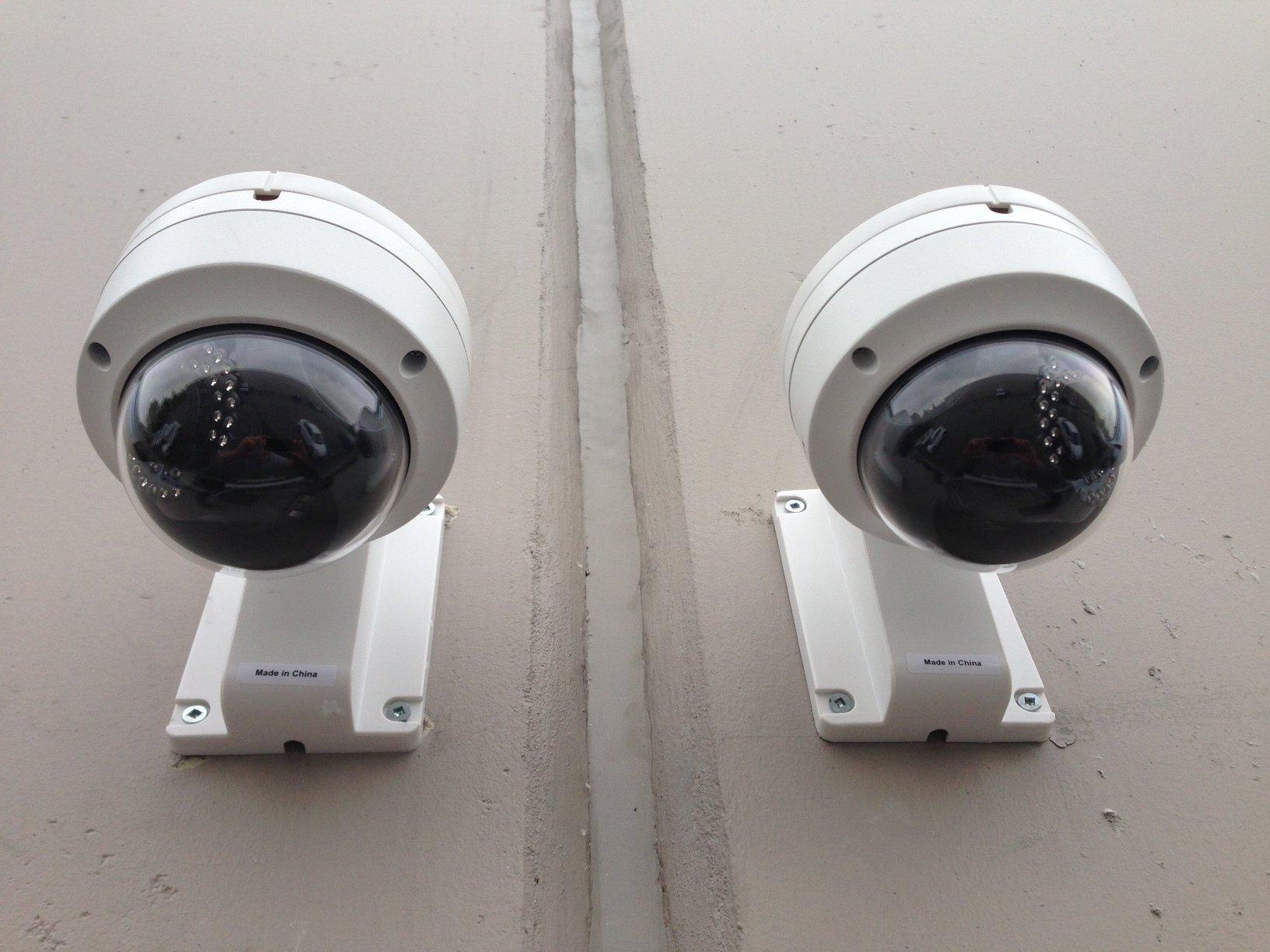
Photo credits: "Video Surveillance Installation" by Artechvideo, CC BY-SA 4.0, via Wikimedia Commons. "Fixing a surveillance camera on Lower Richmond Road" by David Howard, CC BY-SA 2.0, via Wikimedia Commons / Geograph. Control room photo by Asterzenback, CC0, via Wikimedia Commons.